
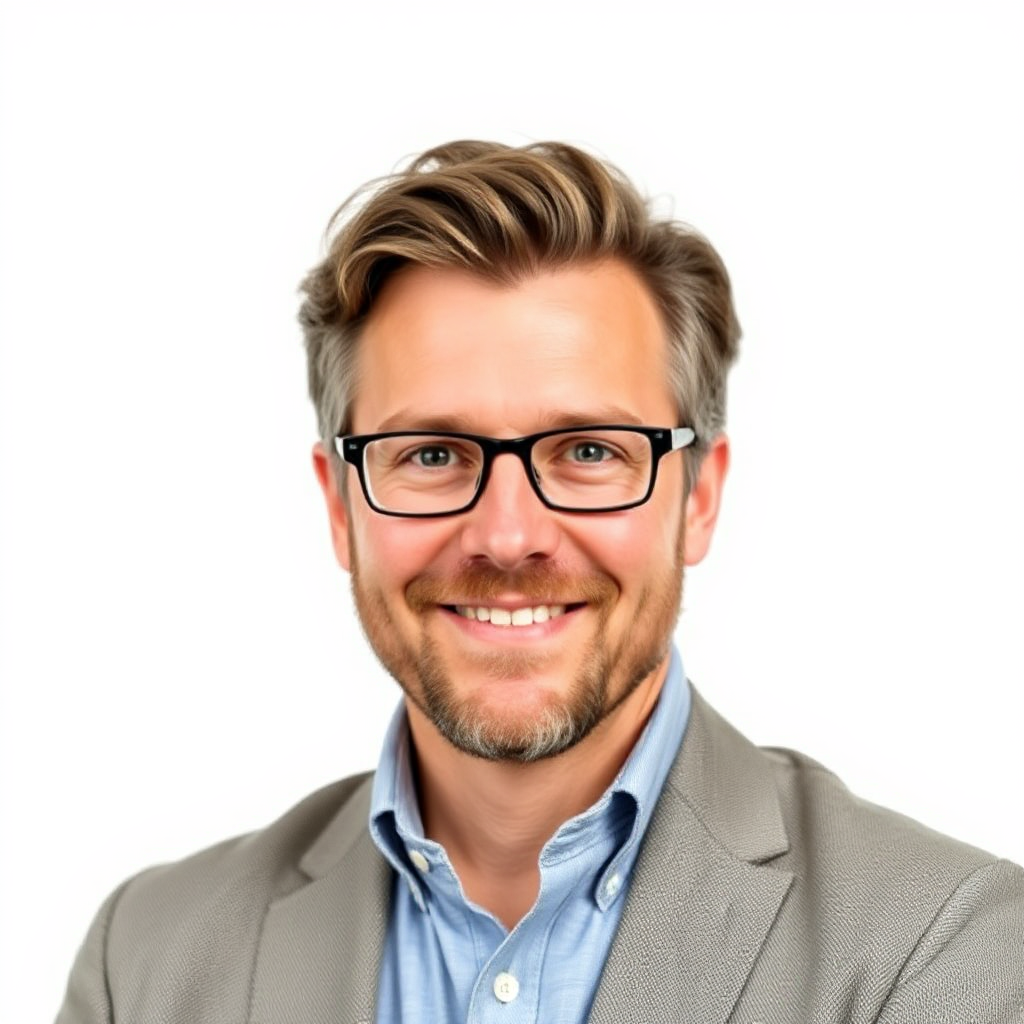
The former US vice-president Dick Cheney, who has died at age 84, was seen as arguably the most powerful incumbents of that office in American history. Whereas many vice-presidents had to settle for minor or symbolic positions, Cheney wielded enormous influence during the administration of George W Bush, to the point that he was often called as the "actual president".
Bush objected to that description and stated the connection was more complicated. He pointed out that Cheney was courteous, invariably referring to him in public settings as the President, while he called him as Dick. Bush questioned even characterisations of their association as a collaboration because it indicated that they were peers. Despite such protestations, Cheney considered the easygoing president accommodating on a broad range of policy decisions.
A Aftermath of 9/11
Leading of a faction of neo-cons that encompassed Pentagon chief Donald Rumsfeld and assistant defense secretary Paul Wolfowitz, he pushed hard for the military intervention of Iraq in 2003 in answer to the 9/11 attacks on New York and Washington. When of the 9/11 strike, Bush had been attending a session at a elementary school in Florida. Whereas Bush made his way to a secret bunker in Nebraska, Cheney took command, commanding the shooting down of any unresponsive planes nearing the US Capitol.
Cheney claimed the strikes altered his perspective, leading him to become focused on retribution. Along with other neo-cons, such as Rumsfeld and Wolfowitz, he advocated for a occupation of Afghanistan in an effort to capture Osama bin Laden. Cheney then strongly advocated for the armed intervention of Iraq, even though there was little proof of Saddam Hussein being involved.
Controversial Policies
He voiced no apologies about the military campaign, in which an approximated 100,000 Iraqis perished, nor about the enhanced interrogation of detainees captured after 9/11. He informed CNN in 2015 that the Iraq military action, which was based on faulty intelligence circulated by Cheney, was the right course of action. "It represented the proper decision to do back then. I was convinced at the time and I believe it presently."
Yet even then, there were dissenting voices at a senior level about the botched execution of Iraq. One of the government's own representatives to the area, General Anthony Zinni (2001-03), was not retained from the role. "I saw, at a minimum," he subsequently stated "true dereliction, carelessness, and recklessness: potentially, falsehoods, ineptitude, and corruption."
Wider Perspective
Cheney was not completely to blame for the Iraq military action. Even before 9/11, Wolfowitz had pushed for such action. He had written a memorandum setting out scenarios in which American interests might be threatened (encompassing "availability of essential resources, mostly Persian Gulf oil"). Wolfowitz had asserted that "the US should be positioned to act independently when collective action cannot be orchestrated," explicitly referencing armed actions against Iraq.
Bush too had arrived in the Oval Office somewhat determined on carrying out what his father had notably declined to do in 1991; topple Saddam. After he had been fired by the president, the Treasury head Paul O'Neill revealed how, at the first meeting of the National Security Council in January 2001, Bush had stated his objective of diminishing America's participation in the Israeli-Palestinian conflict and mooted armed intervention against Iraq.
Bush bore a private grievance against Saddam, convinced he had been behind a conspiracy to assassinate his father, President George HW Bush, on a journey to Kuwait in 1993. He additionally disliked that one of the largest establishments in Baghdad had a ground design with a image of his predecessor's face that all visitors had to walk over.
Investigation Approaches
However it was Cheney who was one of the most vehement supporting attacking Iraq, consistently citing information documents that were either thin or totally misleading. He supported what the Bush White House indirectly described as "enhanced interrogation", the application of interrogation method and harsh treatment.
Addressing a Senate report in 2014 that concluded that no actionable intelligence had been obtained through the torture, Cheney dismissed the report as "loaded with crap". He informed Fox News: "We requested [the CIA] to implement measures and establish programmes to capture the bastards who took the lives of 3,000 of us on 9/11 and ensure it never happened again. That was specifically what they did and they deserve a lot of credit."
External Perception
Cheney took pleasure in nicknames assigned to him by opponents such as the dark character and the sinister presence, and by the notion that he was a dark force manipulating Bush. In the author's 2013 publication about the pair, Days of Fire: Bush and Cheney in the White House, Cheney is cited as commenting: "Is it me who is the evil genius in the background that remains unseen emerge from his lair? That is a advantageous way to operate, actually."
Business Interests
Dispute over his business interests accompanied him through his period as vice-president. Although he had limited background in business but established relationships in military, notably in Saudi Arabia, he was offered a position at Halliburton, one of the world's biggest petroleum companies, in 1995 as chair and top executive.
In 2000 he was selected as Bush's election partner for the executive branch. Contentiously, during the conflict in Iraq, Halliburton was awarded US agreements worth multiple billions.
It made him rich. His yearly compensation during his tenure at the company rose from his previous salary during his time as Pentagon chief to millions. When he left in 2000 he had a package valued at over $20m|twenty
